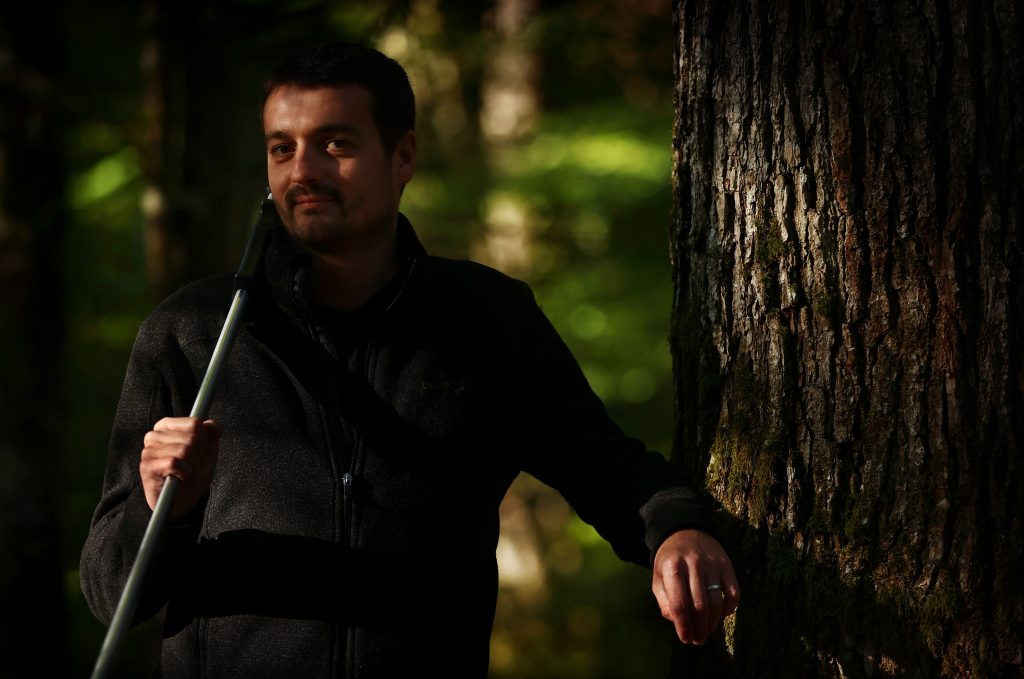
Geoffrey Larivé, buyer responsible for oak supply for Charlois
The Quest for Oak Staves
Tuesday, 15 September. We are still in summer, but autumn is approaching, heralding the ONF’s autumn timber sales. This is a crucial time for our buyers. Geoffrey Larivé is one of Charlois’ four buyers who travel throughout France’s forests all year round, searching for the finest oak trees. We spent a day with him to discover what his daily work involves.
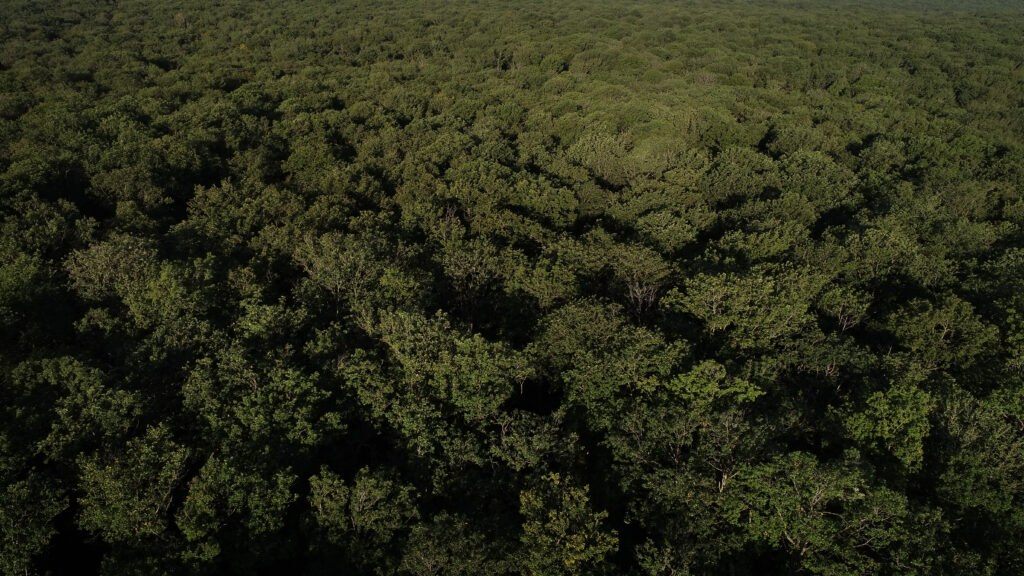
We head towards the Allier department, near the border with the Nièvre. As we drive, forest stretches out on either side of the road. The departmental road gives way to a forest track, restricted to authorised users. We are among them.
Geoffrey enters the GPS coordinates of the plot to be assessed. Plot 55, a single lot, an even-aged stand of native oak, scheduled for a regeneration cut. 120 trees in total. For Geoffrey, it is a day like any other, or almost. “For me, no two days are ever the same. The forest is constantly changing, and it looks different depending on where you are. The seasons make a difference too.”
Everything starts with Forest
We are near the Tronçais forest, in the Civrais state forest. Geoffrey has made it his own playground, having grown up surrounded by the oaks of the Bertranges forest.
“I’m very fond of this forest, and of the forests of the Allier region in general. They are renowned for the quality of their oak staves.”
And that is exactly what he is looking for today, just as he does every other day. For the past ten years, Geoffrey has donned his buyer’s gear every morning: boots, spray paint, callipers, and above all, a keen eye. An essential tool in his line of work.
Nothing in Geoffrey’s background suggested he would pursue a career in forestry. He completed a vocational diploma in sales, followed by a two-year higher education qualification in the same field. After finishing his studies, he moved to Moulins to follow in his partner’s footsteps.
“I worked for two years in Moulins, managing online grocery orders for a major supermarket chain. Nothing to do with what I do today. I’ve always liked numbers, so I could easily have seen myself working in accounting, for example.”
But it is along a very different path that Geoffrey would find his calling.
In His Blood, or a Legacy?
Homesick, perhaps, or a desire to reconnect with his roots? When the opportunity to join Charlois’ team of timber buyers arises, Geoffrey seizes it.
“I thought, why not? I’ve always loved the forest and nature. I decided to give it a go.”
It is 2016. Six months of intensive training follow. No office, no paperwork, no pencils, just hands-on experience in the forest. Under the guidance of two highly experienced mentors, Éric Leporcq and Patrick Larivé, his father, Geoffrey learns about the forest, oak and stave wood. He learns how to read a tree, observe its surroundings and examine it from top to bottom. Every detail provides a clue to the oak’s quality, essential for an accurate assessment.
“I was lucky to learn from the best, that’s true. My father, who has been doing this job for so many years, took me under his wing, of course, as did Éric. I must have been doing reasonably well, because after six months they sent me out to assess plots on my own. Although they were still keeping an eye on me!”
Tree by Tree
After ten years on the job, Geoffrey has mastered the ins and outs of the trade, along with its specialist terminology.
“This job requires precision. We can’t afford to get a lot assessment wrong or overestimate its value. We have to find the right price. There are so many factors to consider. We can identify oak suitable for stave production in places where nobody else would think to look.”
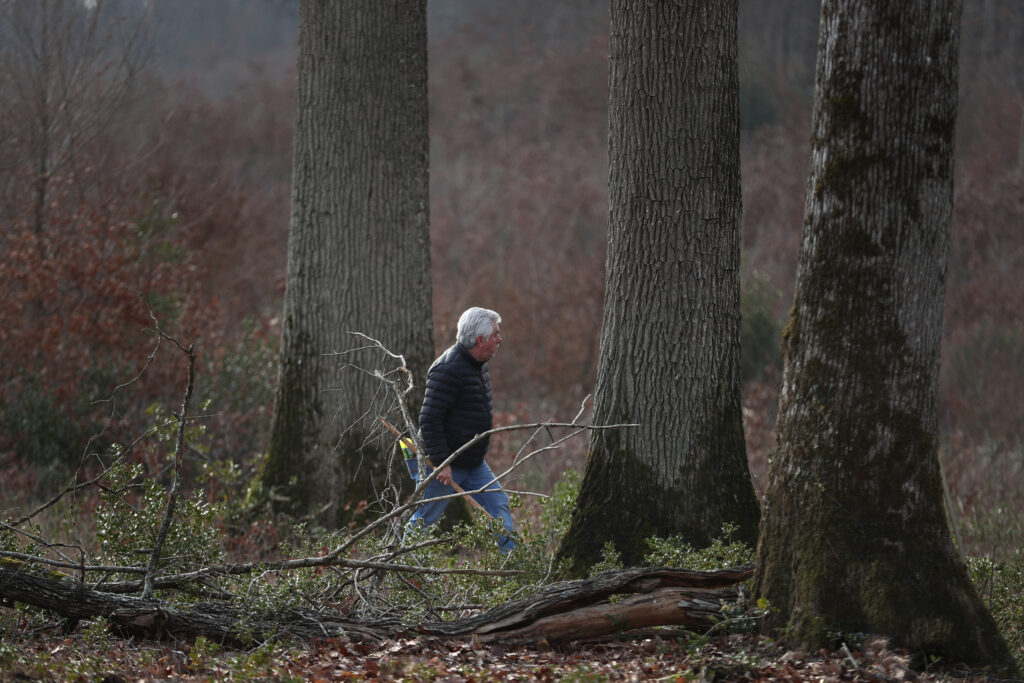
Geoffrey points to an oak tree. “You see, from the base up to the first branch, there are seven or eight metres of stave-quality wood. Above the first branch, there’s another metre or so. The quality may be lower, but it can still be used to make staves.”
A little further on, the base of an oak has been cored.
“We usually do this to make sure the oak hasn’t developed red heartwood due to fungal attack. We take a core sample at the base and check the colour of the wood shavings. There are other indicators too, such as the presence of butcher’s broom [a shrub also known as knee-holly], or a nearby stream.”
Each oak is marked with a red line. Geoffrey adds a quick spray-paint mark of his own.
“It’s mainly to remind me that I’ve already assessed this tree. There’s no point going over the same ground twice and assessing the same oak again.”
As we make our way back up the plot towards the car, the last oaks in the lot stand before us, majestic and timeless. On the first, part of the bark has split due to frost. Further on, another bears the scars of an injury, probably caused by a falling tree or branch.
“These are details that matter when I assess the quality of the stave wood at this particular spot.”
The Big Find
Throughout the assessment, the characteristics of each oak tree are recorded on the device Geoffrey wears on his wrist. Height, diameter, estimated volume of stave wood… All the data is added together to calculate the estimated value of the lot.
“I check whether the figure is realistic. This is the price we’ll bid for the lot at the timber sale. We’ll see whether it’s enough to secure it. There’s always an element of uncertainty. We don’t know what the other buyers are thinking, what they’re planning to do, whether they’ll bid and how high they’ll go. It’s a bit of a cat-and-mouse game.”
There are still two more lots to assess today, with around a hundred standing trees in total.
“Boris [head of oak purchasing] and I select the plots we want to visit in advance. There’s no point assessing lots we’re not going to buy or don’t need.”
We’re back on the forest tracks, then out on the road. On both sides of the D978, the forest stretches as far as the eye can see. The plots follow one another, but no two are alike. There are noticeable differences in age and generation from one plot to the next.
“That one there is plot 50. It’s listed in the sale catalogue. It’s really beautiful, isn’t it?”
I nod, looking at the centuries-old oaks standing one after another. We stop just to admire them. This plot isn’t on today’s itinerary.
We head for plot 11, which covers seven hectares. There are two lots to assess and almost 100 standing oaks. Callipers, spray paint, wrist-mounted device. We’re off for a good hour and a half, working our way from tree to tree through the brambles.
“You have to love the forest to do this job. Nature itself, quite simply.”
Three Questions for Geoffrey:
You’ve been working as a timber buyer for ten years, having started at a young age. What qualities are essential for this role?
Rigour, and more rigour. We spend almost every day in the forest assessing oak trees. You must never let bad habits creep in. With time and experience, you learn to estimate a tree’s diameter and the height to the base of its crown from a distance, but that doesn’t mean you can skip checking it in person. An oak can reveal clues that tell us about the quality of its wood.
You also need to enjoy working alone and be comfortable with covering long distances. My area stretches from Limousin to Normandy, taking in central France along the way. It’s a huge territory. You have to make the most of your time and plan your journeys carefully. Being organised is essential.
One major change has been the introduction of GPS coordinates for each lot. When I started, we used maps, specifically IGN maps. We spent more time trying to find the plots. That’s also how you learn to get to know the forest, the different forests, and find your way around.
What do you enjoy most about your job?
Everything, absolutely everything. I’ve been exploring forests for ten years, and I still love walking through them just as much. Every day is different. The light is never the same, and you see the forest changing with the seasons. Right now, you can sense autumn approaching, with its blend of colours. It’s magical.
There’s the sound of silence, broken by birdsong and the crackle of branches underfoot. If you’re lucky, at this time of year you can hear the stag rut, even in broad daylight. In spring, you witness the forest coming back to life, as buds form and leaves emerge. And then there’s the smell of the forest, which changes with every season too.
I also enjoy being alone and organising my own schedule. Exploring, discovering new places, and seeing these majestic oaks every day is a luxury, as far as I’m concerned. Tronçais, Bercé, Loches and, of course, the Bertranges. They are the most beautiful forests in France.
And we’re right at the beginning of the Charlois supply chain.
You’re also involved in community life?
Yes. I look after the U11 team at the Guérigny football club, where I’ve also played for years. I started coaching the club’s young players because my son played there. It’s a way to spend time with him and share a passion.
It means a lot to me, and I’m heavily involved. It also takes up quite a bit of my time, especially at weekends, with the U11 competitions on Saturdays and my own matches on Sundays. But when you love what you do…
The ONF’s autumn timber sales comprise around 40 to 50 individual sales. Among the largest are the sale in La Motte-Beuvron, covering the Centre-West region; the sale in Clamecy, covering the Nièvre and Yonne departments, including the Bertranges and Nevers forest areas; and the sale in Cérilly, covering the forests of the Allier department, particularly Tronçais, as well as the Cher department and part of the Indre department.
Photographs © Christophe Deschanel
FURTHER READING


LET'S TALK!
A Question?