Gazeteer of France’s great oak woods – Orléans, the largest in all France
12 August 2019
3 min.

Published in October 2018, the book The oak in majesty, from forest to winehighlights the concept of forest terroir: a specific soil, aspect, and rainfall, as well as a particular exposure to sunlight, to which should be added the species or variety of tree, the density of plantation, as well as average age, all of which will influence the grain and quality of the wood. The value of a mature high forest will thus depend on both the terroir and in the way in which it has been “led,” as French winegrowers say, or managed, in the words of the forester.
The book, fully illustrated with photographies, compile, through a gazeteer with a lot of details about geography, mesoclimate and history, a list of twenty-six beautiful oak wood forests, as the forest of Orléans.
Although this is the largest national forest in metropolitan France at 34,658 hectares (85,640 acres), it was formerly five times the size. What remains of the old forest of the Loges forms a circular arc 60 km (around 37 miles) long northeast of Orléans at an average altitude of 140 meters (460 feet). Rainfall is 638 mm (25 1/8 in.) per annum, which is relatively low, especially since the flat terrain does little to facilitate runoff. Still, a large number of ponds provide relief in periods of drought between April and September. The forest sits on different types of geological formations with, from north to south, Beauce limestone, sand and clay in the regions of Orléans and the Sologne, as well as ancient Loire alluvions.
This majestic ensemble is divided into four massifs, all with different soils and varieties of tree. The massifs of Orléans and Ingrannes, growing on sand and clay, are marked by a majority of oak (64%), with Scots pine (19%). The massif of Lorris-les-Bordes has a predominance of oak (46%), Scots pine (36%), and laricio (black pine – 13%). Finally, in the massif of Lorris-Châteauneuf oak is in the minority (35%) compared to Scots pine (46%) and laricio (16%). The two chief preoccupations in this forest are environmental protection and timber production. In 2012 sales generated more than 6 million euros, for less than 150,000 cubic meters.
Once managed by the Maîtrise Royale des Eaux et Forêts of Orléans this green lung, which feeds the groundwater of the Paris area, is sliced in two by the watershed between the Seine and the Loire. Of Atlantic type, it has been a national forest since 1848, and is today managed by the ONF. Each massif benefits from a specific twenty-year management plan that provides for the removal of undergrowth and a planned clearing program. An oak forest destined to produce 200-year- old trees will undergo shelterwood cutting, two to three secondary cuts, and then a final one, known as a regeneration cut, all interspersed every ten years with improvement cutting. The preferred varieties, sessile oak and pine, in other words those that best resist dry conditions, grow alongside secondary varieties such as beech, aspen, birch, and hornbeam.
A fifth massif of 3,200 hectares (7,910 acres) has been isolated to form a RIB (reserve of biological interest) that acts a little like the savings account for each forest the ONF manages. It comprises islets of old trees, plots dedicated to the reproduction of birds of prey or protected species, as well as areas that contain water sources that need protecting. The viewpoints of Nibelle and the Caillettes allow the animals to be observed. Two Natura 2000 sites cover the forest of Orléans, where shooting and hunting to hounds are the only means of maintaining the balance between fauna and flora.
Find out the entire gazeteer of France’s great oak woods, and much more, in The oak in majesty, from forest to winewritten by Sylvain Charlois and Thierry Dussard.
News
FURTHER READING
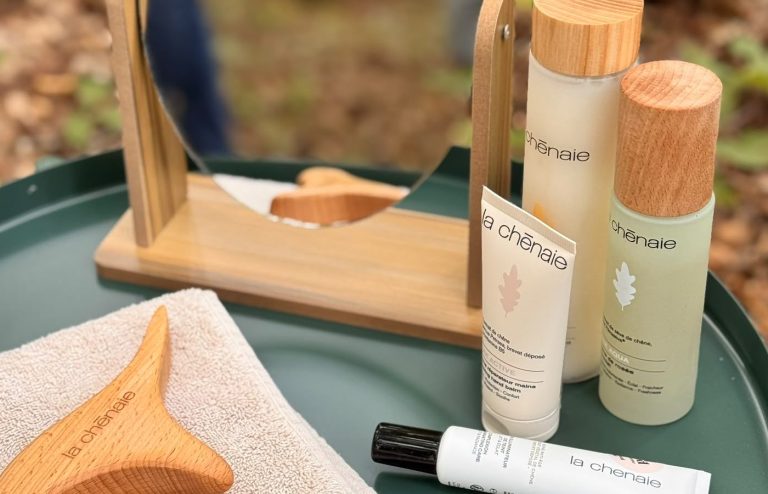
La Chênaie, a story taking root in Murlin
For an immersive stay, La Chênaie welcomed several content creators from the worlds of fashion, gastronomy and lifestyle to Murlin: Chloé Penel, Armelle Perves, Héloïse Brion, Nathalie Oliver and Maï de Colnet. Two days to discover that behind the brand lies far more than a source of inspiration: a family history, a region and an intimate knowledge [...]
07 October 2026
3 min.
Le Chai Saint Olive, a winery in the heart of Lyon
Unusual winemakers came to visit Charlois facilities in Murlin. Grégoire and Franck Saint Olive have established Lyon’s first urban winery, in the heart of the city’s 6th arrondissement. An unusual place where they make their own wines from grapes purchased from neighbouring winegrowers. A winery in the city, offering a different approach to wine.
29 September 2026
3 min.

L’Atelier [Itinérant] du Tonnelier - Now Operational
We are in the middle of the grape harvest in Burgundy, and a rather unusual truck is making its way through the vineyards, travelling from one village to the next. A vintage-looking truck, a Citroën Type H van reminiscent of days gone by. Its arrival does not go unnoticed: people take pictures of it and ask Laurent, who is behind the wheel: “What y [...]
10 September 2026
3 min.

LET'S TALK!
A Question?


